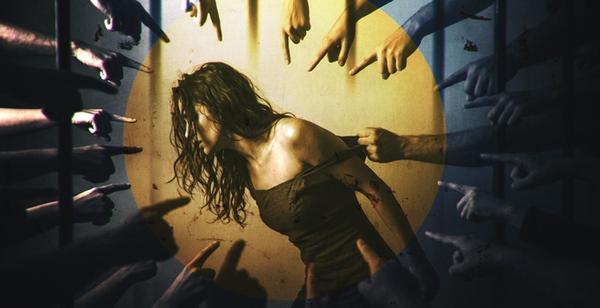
YOUR EVERY ORIENTALIST DREAM, Our Problem with Belly Dancing (and Women’s Bodies, in General)

As this language of movement traveled westward, it gathered new textures. Across North Africa, the tradition unfurled with its own inflections: moving through local rhythms and folkloric histories, each region imprinting its own palette and dialect onto this shared alphabet of the body.In Egypt’s raqs baladi tradition, the same spirit surfaced almost organically, with bursts of energy in female-only spaces, where technique yielded to something more instinctive: celebrating the body as sacred gro...

Cairo's New Museum Is Gorgeous. It's Also a Double Standard.

Decontextualized and rebranded as “universal heritage,” they were implanted in foreign galleries with a narrative that insisted they somehow belonged to everyone, and therefore to no one. This argument resurfaced most loudly whenever Egypt demanded the return of major objects: the Rosetta Stone from the British Museum, the bust of Nefertiti from Berlin’s Neues Museum. The defense was always the same: these institutions claimed to serve a global audience, and insisted that “developing countries”...

la génération qui devait tout réussir avant 30 ans

Dans une économie saturée où la performance remplace la coopération, une génération entière grandit convaincue qu’elle n’a pas mérité sa place. Le syndrome de l’imposteur devient la norme, nourrissant anxiété, paralysie et peur constante de ne pas être à la hauteur. Entre l’injonction de ‘réussir vite’ et la précarité réelle, beaucoup ne cherchent plus à exceller, mais simplement à survivre dans un système qui valorise la performance au détriment de la santé mentale.

The Fairuz phenomenon

Perhaps nothing at all—just a musical whisper, a name that rhymes with fairy, one that carries something mystical in its sound. Yet within the Arab memory, Fairuz is far more than a voice. She is a marker of home: the light of morning, the scent of jasmine drifting through a veranda, the familiar soundtrack of everyday life. Over time, her voice became an idea, a ritual, an identity—an entire constellation of belonging. What began in Lebanon has crossed borders and generations, turning a singer into a shared cultural memory.

About

I’m a 23-year-old journalist based in Paris, reporting in English, French, and Arabic. I’m in the final year of a master’s in bilingual journalism (English–French) at Sorbonne Nouvelle, after a bachelor’s in English Literature there.

I cover culture, migration, mental health and humanitarian issues, mostly through interviews and field reporting.

In 2022, Brut Tunisia interviewed me about mental health. The response drew me to journalism on the subjects people rarely discuss.

I’m currently reporting on the care given to exiled torture survivors in Paris.

I also write poetry and prose, which covers the same ground as my journalism, without the word count.

Available for internships from March 2027.